
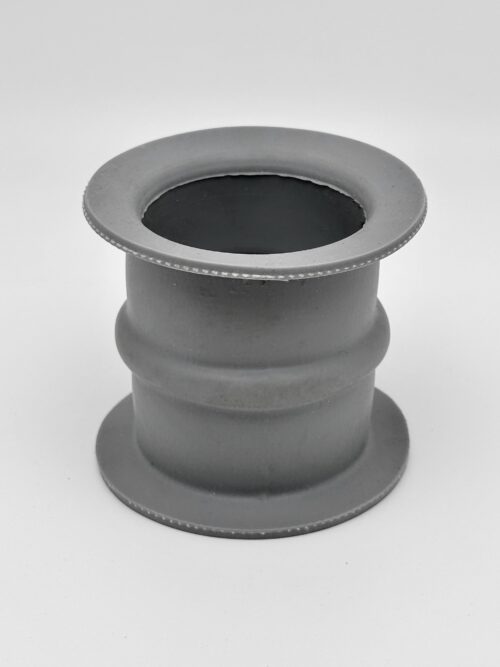
 At RD Rubber Technology Corporation, we specialize in manufacturing engineered-quality flexible connectors and ducting solutions designed for critical-to-function applications. While many industry standards utilize metal components, our flexible rubber connectors are engineered using high-performance reinforced materials-such as fabric-embedded silicone-to provide superior temperature ratings, durability, and vibration isolation in demanding environments.
Engineered Quality for Regulated Industries
Flexible connectors are custom engineered to meet the stringent requirements of original equipment manufacturers (OEMs) operating in demanding environments. We provide manufacturing expertise to sectors including military, defense, aerospace, and space, where components must maintain integrity under fluctuating pressures and temperatures.
Additionally, our custom-molded rubber components serve the MedTech and biopharmaceutical industries, utilizing our ISO 14644 Class 8 cleanroom to prevent contamination in fluid transport systems. We also engineer solutions for food and dairy processing, ensuring that these critical-to-function components meet the necessary safety and performance standards for hygienic applications.
Reinforced Rubber Flexible Connector Types & Applications
Fabric reinforced rubber flexible connectors facilitate the movement of air, gas, and fluids.
- Flexible Duct Connector: These components are vital for reducing noise and isolating vibrations in high-velocity ventilation systems. Air duct flexible connectors are engineered to manage thermal expansion and contraction while maintaining an airtight seal, protecting downstream instrumentation from vibrational fatigue.
- Flexible Gas Connector: Manufactured using specialized elastomers like Nitrile, flexible gas connectors offer superior resistance to fuels and corrosive chemical agents. These parts are engineered for safe gas transport in complex systems where multi-directional flexibility is required to accommodate system movement.
- Fluid Connectors: Reinforced rubber solutions are ideal for high-pressure fluid transfer, providing a lightweight alternative to rigid piping that simplifies installation and reduces the mechanical load on system anchors.
Fabric-Reinforced Thermoset Elastomers
The performance of a flexible connector is directly tied to its material composition. By embedding high-performance fabric into an elastomer, we can enhance the mechanical properties of these components.
- Reinforced Silicone: The primary material choice for high-temperature applications, fabric embedded into silicone offers a reliable operating range from -65°F to over 450°F. This reinforcement provides the necessary tensile strength to resist tearing under pressure while maintaining the material’s inherent resistance to ozone, UV exposure, and environmental aging.
- Reinforced Nitrile (NBR): This is a premier choice for air duct flexible connectors and fluid transport systems exposed to harsh outdoor or steam-heavy environments. By reinforcing the elastomer with high-tensile fabric, we can significantly enhance the material’s burst pressure rating and resistance to mechanical fatigue.
- Reinforced EPDM: For applications involving fuel, oil, and chemical transport, fabric embedded into Nitrile provides the necessary barrier properties and physical strength to ensure system safety. This material is a staple for flexible gas connectors and fluid lines in military and aerospace ground support equipment.
We work closely with procurement and engineering teams to select the optimal elastomer based on the specific demands of the application.
Technical Comparison: Reinforced Rubber vs. Metal Connectors
Engineers evaluating flexible connectors often compare the mechanical advantages of reinforced rubber against traditional metal bellows. Flexible rubber connectors offer several distinct advantages in critical-to-function systems:
- Vibration and Noise Attenuation: Unlike metal, which acts as a conductor for sound and vibration, rubber is a natural dampener. It breaks the bridge of mechanical vibration between equipment and ductwork, preventing fatigue damage to sensitive system components.
- Multi-Directional Flexibility: Metal connectors typically handle axial movement well but may require complex hardware to accommodate lateral or torsional shifts. Reinforced rubber connectors can easily handle axial, lateral, and angular misalignment simultaneously.
- Reduced Reacting Forces: Rubber components have lower spring rates than metal, meaning they exert significantly less force on system anchors and support structures during thermal expansion.
- Corrosion Resilience: High-performance elastomers do not suffer from oxidation or stress-corrosion cracking that can affect even high-grade stainless steel in chemically hostile or high-moisture environments.
Quality Assurance, Service, and Certifications
RD Rubber Technology Corporation is committed to delivering engineered-quality components through a robust quality management system. Our manufacturing processes are scrutinized under rigorous standards to provide customers with peace-of-mind.
Our facility and solutions maintain the following certifications and registrations:
- ISO 9001:2015 certified
- AS9100:2016 certified
- Department of Defense (DOD) Joint Certification Program (JCP) certified
- ISO 14644 Class 8 Cleanroom
- NIST 800-171 compliant
- ITAR registered
Contact us for any questions you may have, or request a quote for your next project.
Frequently Asked Questions (FAQs)
Q. What is the temperature rating for your flexible rubber connectors?
A. By using advanced materials like fabric reinforced silicone, we can engineer connectors that perform reliably in temperatures ranging from -65°F to over 450°F, depending on the specific reinforcement used.
Q. How do flexible connectors differ from expansion joints?
A. While both handle movement, reinforced rubber flexible connectors are primarily designed to isolate high-frequency vibrations and noise in ducting or fluid lines, whereas expansion joints are engineered to absorb significant thermal expansion and contraction.
Q. Do you assist with the engineering of the connectors?
A. Yes. Our team assists with the manufacturing and engineering of your custom-molded rubber solutions to ensure safety, quality and delivery.